
How York County VITA is Removing Barriers for Working Families
April 21, 2026
Written by Karl Vogl ll
In York County, a volunteer-driven program is working to change that.
The Volunteer Income Tax Assistance program, known as VITA, offers free tax preparation services to eligible taxpayers, helping ensure they receive the full refunds and credits they have earned. Operated locally out of Pathways Community Center, and Winthrop University the service is staffed entirely by IRS-certified volunteers and is designed to make tax filing accessible, accurate and free. VITA also partners with the City of Rock Hill and United Way
“We help the community file tax returns electronically, and we double-check everything to make sure taxpayers receive all the credits they’re entitled to,” said site coordinator Bill Perry. “There’s no charge, we’re 100% volunteers.”
VITA sites generally serve individuals who earn about $69,000 or less, as well as people with disabilities, limited English-speaking taxpayers and those who need assistance navigating the filing process. Services include preparation of basic returns, W-2 income, most 1099 forms and access to key credits such as the Earned Income Tax Credit and Child Tax Credit. Some locations also assist with prior-year returns.
For many residents, avoiding preparation fees can make a meaningful difference.
Erin Freel, a York County resident and single mother, said she first learned about VITA while working at City Hall and has relied on it since.
“I thought it was incredible that there was a place people could go and get help without being charged,” she said. “A lot of private tax services charge too much, especially when you have additional credits.”
Those added fees can cut into refunds that families rely on for essential expenses.
“As a single mom who doesn’t receive child support, the child tax credit is a big deal,” Freel said. “But some places charge more just to process those credits, the same money you actually need.”
Using VITA has allowed her to keep more of her refund and better support her children.
“Having a free service means I get to keep what I’ve worked for,” she said. “That allows me to provide more for my kids. That’s a big deal.”
The York County VITA site recently relocated from City Hall to Pathways Community Center, a move that coordinators say has improved access and increased participation.
“Being at Pathways has made it easier for the community to come in and get services,” Perry said. “It’s a space that’s already centered around serving people, so it’s a natural fit.”
Since the move, the site has seen an increase in the number of taxpayers seeking assistance. Still, challenges remain. Assistant coordinator Janice Louttit said one of the most common issues is that filers arrive without the necessary documentation.
To complete a return, taxpayers are typically required to bring a government-issued photo ID, Social Security cards or ITINs for all household members, income documents such as W-2s or 1099s, a copy of the previous year’s tax return, and banking information for direct deposit. Married couples filing jointly must both be present.
Louttit said recent changes in tax laws have also added complexity for both taxpayers and preparers.
“After COVID, there were a lot of new programs and ongoing changes to the tax code,” she said. “Even recently, some updates were implemented so quickly that people’s documents don’t always reflect what non-taxable W-2 income is like overtime and tips.”
Despite those challenges, she said the work remains deeply rewarding.
“When I retired, I knew this is what I wanted to do,” Louttit said. “This is my favorite time of the year.”
For taxpayers like Freel, the value of the program goes beyond cost savings.
“It’s a safe environment,” she said. “They’re honest, they explain everything clearly, and they’re there to help. It shouldn’t be complicated.”
During the 2026 tax season VITA processed 5,263 returns representing 2,843 clients.
Though the tax season is now over, the York County VITA site is seeking additional volunteers to meet growing demand. Community members can receive free IRS certification and training for next year, with opportunities to assist in tax preparation, client intake and site support.
Those interested in volunteering for the 2027 tax season are encouraged to connect with the VITA program at Pathways Community Center and help ensure more families can access the support they need.
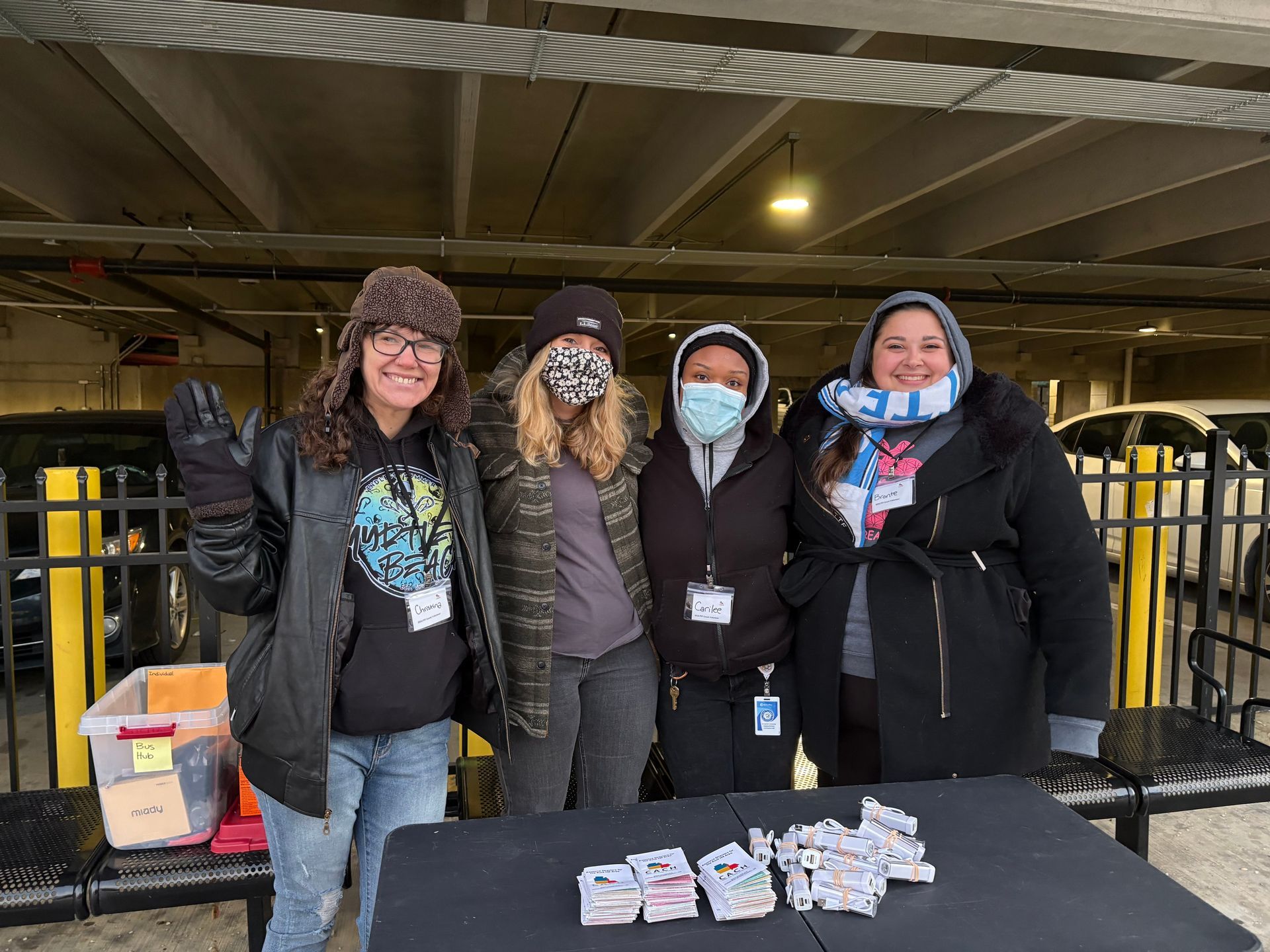
Written by Karl Vogl ll Recovery is rarely a journey that happens alone. Behind every step forward is often someone who understands the struggle, offers support and reminds a person that a different future is possible. That is at the heart of the work at Faces And Voices Of Recovery Tri-County, also known as FAVOR Piedmont, a recovery community organization located on the campus of Pathways Community Center in Rock Hill. FAVOR Piedmont provides free substance use recovery support services, both in person and virtually, to individuals and families across York, Chester, Lancaster, Fairfield, Union and Cherokee counties. The organization connects people with support rooted in lived experience, understanding and community, with a focus on making sure individuals have access to the resources they need throughout their recovery journey. Rather than simply explaining what recovery can look like, FAVOR connects individuals with Peers, people who have walked through their own challenges and understand the importance of having someone alongside them. In a recent interview, FAVOR Piedmont’s Executive Director Jamie Chrisman Low, who is in Recovery herself, detailed how the organization, which is led by individuals in recovery from substance use disorders, works to create meaningful connections while providing space for hope, dignity and lasting change. One of FAVOR Piedmont's primary services is its peer led recovery groups. These groups create intentional spaces where individuals at different stages of recovery can connect with trained and certified peers who use trauma informed, evidence-based practices to provide support. The organization also brings educational opportunities into the community and serves as one of six approved training centers in the area for individuals seeking to become certified peer support specialists. A key measure of FAVOR Piedmont's impact is what is known as recovery capital, which refers to the resources a person has available to help sustain long term recovery. Those resources can include housing, transportation, employment, food, clothing, social connections, professional networks and other forms of support that can make a meaningful difference in a person's ability to maintain recovery. FAVOR intentionally works within a larger network of community organizations and service providers to help ensure individuals have access to those resources. For Chrisman Low, one story in particular illustrates what that network can make possible. A young woman who was well known in her community developed an opioid addiction following surgery after becoming dependent on pain medication prescribed during her recovery. Over the course of three years, her substance use progressed to the point that she began considering heroin as an alternative to prescription opioids, or fentanyl from the street. Before taking that step, she reached out to FAVOR Piedmont. She was pregnant, frightened and unsure of where to turn. FAVOR immediately connected her with resources within its network, including medication assisted treatment with Suboxone, a prescription medication approved to treat opioid use disorder. She was also connected with mental health and substance use counselors who supported her throughout her pregnancy. The goal was not simply to address her substance use, but to walk alongside her through the challenges that came with pregnancy, recovery and reclaiming her motherhood. Today, more than five years later, Chrisman Low said the woman continues to engage in counseling and weekly peer support through FAVOR Piedmont. Her child is now beginning kindergarten. "She's living a life beyond her dreams," Chrisman Low said. "It's been over five years now, and it's just a beautiful story." For FAVOR, the story also demonstrates the importance of having a network of people and organizations prepared to respond when someone asks for help. Chrisman Low said the organization's work extends beyond the individual experiencing substance use disorder. FAVOR is also working to raise awareness that substance use disorder affects entire families, not just the person struggling with addiction. Sometimes, cooccurring disorders are present, too. "Addiction is a family disease, and it affects every member of the family," she said. Part of FAVOR’s work involves helping families understand that they can begin their own healing journey even while a loved one continues to struggle with substance use. That philosophy also extends to the organization's work at Pathways Community Center, where FAVOR is part of a larger network of service providers. Chrisman Low said the relationships between organizations on the Pathways campus help create a recovery-oriented continuum of care, allowing individuals to be connected with the next resource or service they need. "We help support each other's work so that there is a continuum of care and no one falls through the cracks," she said. "Someone on campus is going to be able to provide the next resource or the next service for that person." As FAVOR Piedmont works to expand its reach, funding remains one of its greatest challenges. The organization has received support through grants and contributions from community members, but continued financial investment is necessary to maintain its free services and expand its physical presence. FAVOR is currently exploring plans to establish physical recovery spaces in each of the counties it serves. The expansion would create additional opportunities for peer workers, increase access to recovery services and allow FAVOR to expand its community outreach. But financial support is not the only way community members can contribute. Chrisman Low emphasized the importance of volunteers and people who are willing to become involved in the organization's mission. "We welcome volunteers and people who will engage with us to do the work of our mission," she said. "I cannot tell you how much I appreciate people in the community that reach out and say, 'Hey, I want to give back.' It's just a beautiful thing." She also encouraged community members to consider how they interact with people experiencing substance use disorder. For someone who is struggling, a simple act of dignity and respect can become the first step toward connection. Community members can help by sharing information about FAVOR Piedmont, connecting someone with its services or even providing transportation so that person can begin building relationships with a network of people who understand recovery firsthand. At its core, FAVOR Piedmont's work is rooted in the belief that recovery does not have to happen in isolation. Through peer support, community partnerships, education and access to resources, the organization is working to make sure that when someone reaches out for help, there is someone there to answer. And sometimes, that connection can be the beginning of an entirely different future.

Collective Impact in Action July reflected the continued strength of collaboration across the Pathways campus. Through the work of our on-site agencies, partners, and volunteers, 366 services were provided, connecting individuals with resources and support designed to address their needs while helping them move toward greater stability and self-sufficiency. Among individuals who identified health and wellness as a goal, 100% made progress toward enhancing their well-being through access to healthcare, counseling, peer support, and other wellness resources. We also saw 76% of those working toward greater financial independence make progress toward that goal, helping strengthen the foundation needed for long-term stability. These outcomes represent people taking meaningful steps forward and the collective effort surrounding them along the way. As we continue bringing services together in one location, we remain grateful for every agency, partner, volunteer, and supporter helping create pathways toward healthier, more stable futures.
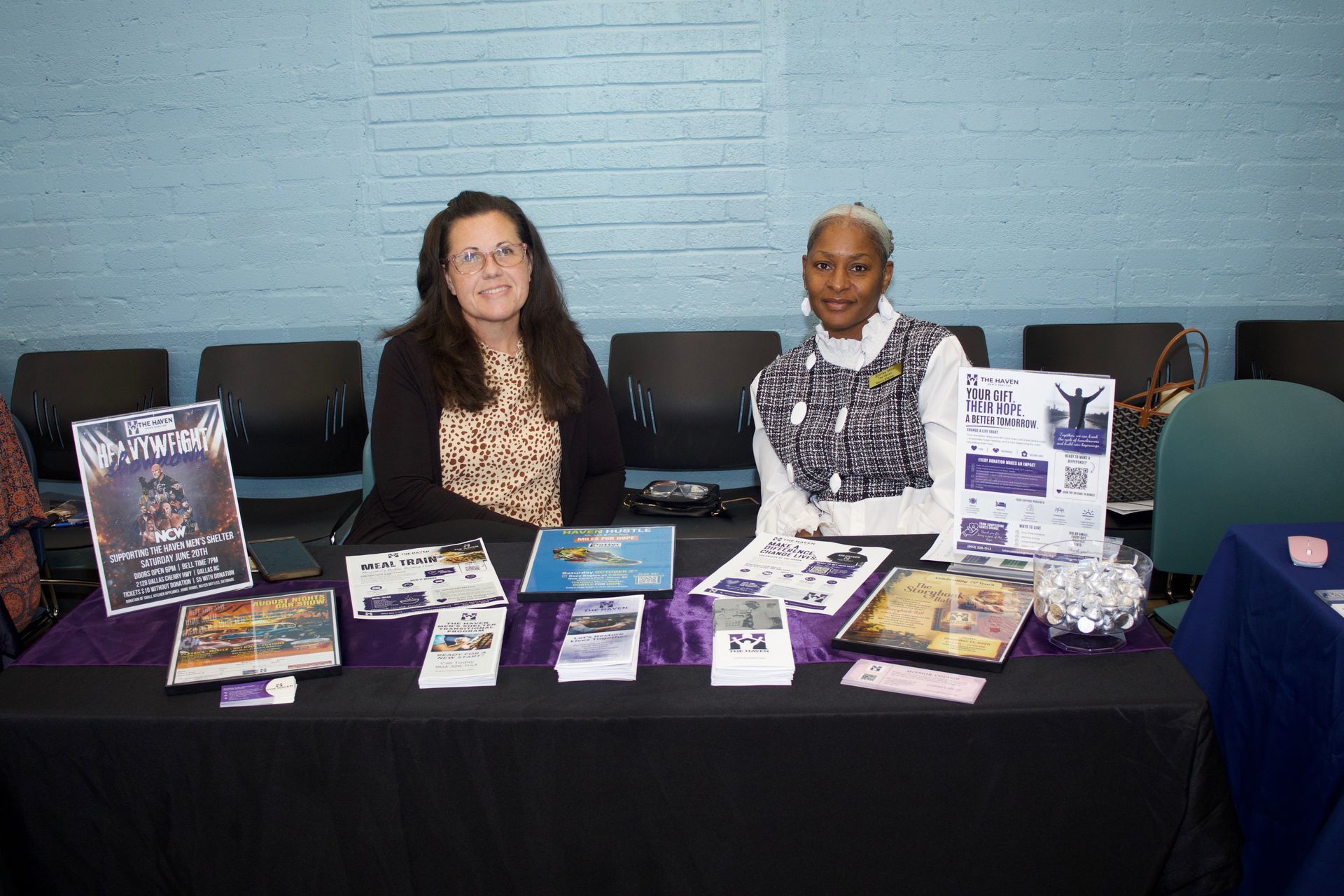
Written by Karl Vogl ll When someone is experiencing homelessness, finding a place to stay can be an important first step. For many men, getting back on their feet requires more than a bed. It requires addressing the challenges that led them there and having people willing to walk alongside them as they work toward something different. That is the work being done at The Haven Men’s Shelter in Rock Hill. Opened in 2006, The Haven is a transitional housing program for men who are ready to leave homelessness behind and work toward a more stable future. The program serves men 18 and older who are able to work full-time, maintain sobriety and demonstrate a genuine desire to make a change in their lives. The Haven is considered a “high-barrier” shelter because residents are expected to take an active role in their own progress. They must maintain sobriety, follow house rules, participate in services and take responsibility for the goals they set for themselves. “We are a transitional housing program,” said Nancy Foster, executive director of The Haven’s Men’s Shelter. “We have a 90 to 120 day program here at the Haven that when men come in, every 30 days, they're evaluated on progress.” During the first 30 days, staff work with each man to identify the challenges and barriers standing in the way of stability. Those barriers can look different for everyone. “It could be a background,” Foster said. “Do we need to go through homeless court? Is it something else that we just need to tackle together?” For others, the barrier may be something they have not even realized is affecting their ability to move forward. The Haven connects residents with medical, dental and vision care to help identify issues that could be affecting their ability to work and maintain stability. From there, residents can begin focusing on employment, income, budgeting, counseling and eventually housing. But Foster said the support men receive at The Haven goes beyond the services they provide. “When they come to the Haven, they are not just clients. They're our family,” she said. For some men, that may be an unfamiliar experience. “Some of them have never had a family,” Foster said. “And some of them don't even know how to deal with what is a true family.” Through compassion, respect and dignity, The Haven works to create an environment where men can begin to see themselves differently. Prayer and Bible study are also part of the program, but Foster said the focus ultimately remains on meeting each person's needs. One former resident's story shows what that support can make possible. The man came to The Haven following a divorce and was unable to see his children because of legal issues. Through the Haven's support, he participated in family counseling and parenting classes while working through his legal challenges. Eventually, his charges were dropped and he was able to reunite with his family. As a veteran, he was also connected with veterans assistance programs that helped his family secure a home of their own in York. “We were able to go celebrate that with them,” Foster said. “And still keep up with them, and they're doing extremely well.” Stories like his are made possible in part because of the community partnerships surrounding The Haven. “I always say it takes a village,” Foster said. Every man who enters the program has different needs, and The Haven often relies on community partners to help fill the gaps. That can mean connecting someone with legal assistance, transportation, employment opportunities, work clothing or housing resources. “Everybody coming through our door has a different situation, so not everybody's the same,” Foster said. That collaborative approach has contributed to a 94% success rate at The Haven, according to Foster. She believes one of the most important parts of that success is preparing men before they transition into permanent housing. “If we did not walk alongside them, get in the trenches with them and help figure them out, they would cycle back through the system,” she said. The Haven's work also does not end when a man leaves the shelter. Staff continue to follow graduates for up to a year, providing support when challenges arise and helping them maintain the progress they have made. “Our work doesn't stop here at the Haven when they leave the doors, 90 to 120 days,” Foster said. “We follow them for a year afterward to make sure if they get in the weeds, we're right there still supporting them.” Looking ahead, The Haven hopes to expand its transitional housing opportunities for men, addressing what Foster sees as a significant gap in the community. She also hopes more people will take the time to understand the work happening at The Haven, not just support it financially. For Foster, being part of the Haven community means knowing who the organization serves, how it serves them and how others can contribute their time, talents and resources. “Come in and see what the Haven does, who we serve, and how we serve them,” Foster said. The Haven's work is not simply about providing shelter. It is about helping men address the barriers in front of them, prepare for what comes next and build a life they can sustain after they leave. For the men who walk through its doors, that support can be the beginning of something new.
