From a Table to a Lifeline: How Manna House Continues to Feed Hope in York County
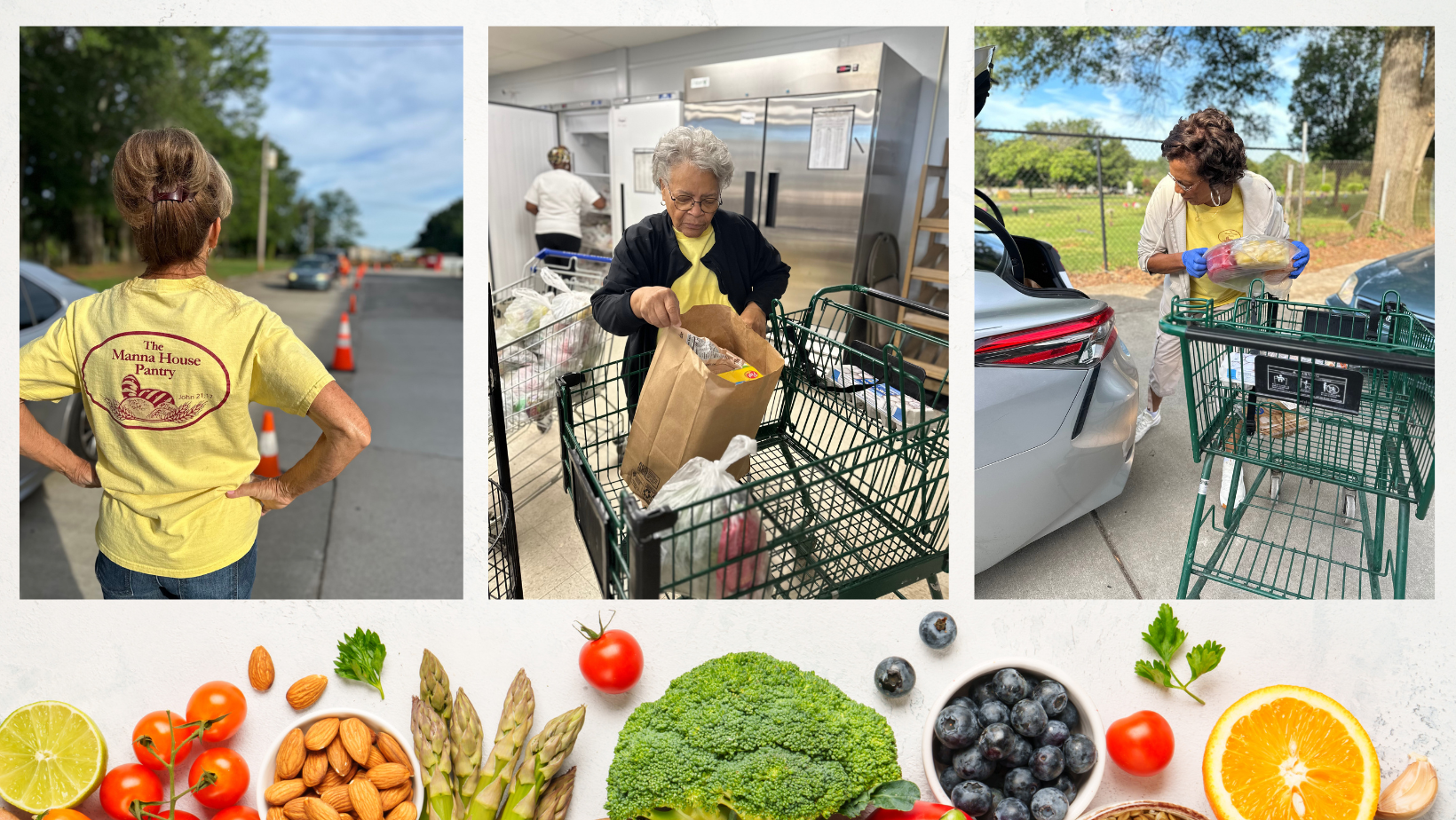
Every Saturday morning, long before the doors open, volunteers are already hard at work preparing for what has become a vital resource for hundreds of families across York County. Located on the campus of Pathways Community Center, Manna House Pantry serves approximately 380 households each week, providing food assistance to individuals and families facing food insecurity. What many people may not realize, however, is that Manna House began with something much smaller.
In 2006, members of Mt. Prospect Baptist Church started a clothing ministry to support neighbors in need. Before long, a small table of canned goods was added to the effort. That table kept growing.
"We had very few pieces of canned goods in the back on a table," recalled longtime volunteer Johnnie Mae. "From the table, it started growing, multiplying."
As demand increased, the ministry expanded from a table to an annex, then to the church basement. In 2017, it became an independent nonprofit organization, and in 2019, Manna House partnered with Pathways Community Center to better serve the growing needs of the community.
Over the years, strategic partnerships have helped Manna House expand both its reach and impact. Through its longstanding relationship with Second Harvest Food Bank of Metrolina and support from Food Lion Feeds, the pantry is able to provide fresh produce, proteins, dairy products, pantry staples, and other nutritious foods to the families it serves each week. These partnerships remain essential to ensuring community members have access to healthy, reliable food resources.
Today, that small table has become a 6,000-square-foot food pantry operated almost entirely by volunteers. But for those who come each week, Manna House is about far more than food.
More Than a Food Pantry
For Ed and Melanie, who live on a fixed income, Manna House has become a weekly source of support.
"We were just going by, saw a lot of cars, pulled in, and they were giving food away," Ed said. That spontaneous decision turned into a routine. "On a set income, it's made a difference. A really big difference."
Like many families served through Manna House, they also share what they receive with others.
"What we can't use, what we don't eat, we share it."
That spirit of generosity surfaced repeatedly throughout interviews with clients. Valda Graham learned about Manna House through a chance encounter with a woman walking home with groceries. When she arrived for the first time, she was struck by the organization and hospitality of the volunteers.
"I met these wonderful ladies and men who volunteer their time to try to help people," she said.
As food prices continue to rise, the pantry has helped her stretch her budget while maintaining access to nutritious meals.
"I'm eating better than I ever have," Graham said. Yet for Graham, the experience extends beyond food assistance.
"This is part of my therapy," she said. "Because I know they pray for me too."
A Community That Keeps Showing Up
One of the most common themes heard from clients was not the food itself, but the people.
"It's good to see the same ones over and over," Melanie said. "You feel a connection to them."
Lawrence Simms has been visiting Manna House for years, often picking up food not only for himself but also for neighbors who cannot make the trip.
"I come for handicapped people who can't get assistance to come here," he said. "I take it to their homes and deliver it."
When asked what makes Manna House different, Simms did not hesitate.
"Every last one of them," he said of the volunteers. "I consider them as my brothers and my sisters too."
Volunteer Bill Scales has witnessed those relationships develop over more than a decade of service.
"You definitely get used to the clients," Scales said. "When you're not here for a while, they'll say, 'Where were you last week?'"
For many visitors, those familiar faces provide comfort, consistency, and a sense of belonging.
Powered by Volunteers
While hundreds of families arrive each Saturday, the work begins long before the first car enters the line. Throughout the week, volunteers sort food, stock shelves, prepare bags, enter client data, organize deliveries, and coordinate distributions. Approximately 25 regular volunteers support the operation during the week, with additional churches, civic groups, businesses, and community organizations serving on Saturdays.
The pantry is also guided by a dedicated volunteer board of directors whose leadership helps sustain the organization's mission, operations, and long-term growth. Together, board members and volunteers contribute thousands of hours each year to ensure families throughout York County have access to nutritious food and compassionate support.
Despite the scale of the operation, there are no paid employees running the pantry.
Everything is powered by volunteers.
"We love it," volunteer Debbie said. "It's fun giving them food."
Her fellow volunteer Cindy echoed that sentiment. "They're very grateful."
For many volunteers, the work is deeply rooted in faith and service.
"I feel that God has blessed me to be able to do this," Johnnie Mae said. "As long as He lets me do it, I'm going to do it."
Feeding More Than Hunger
As one of the longest-standing partner agencies located on the Pathways Community Center campus, Manna House plays an important role in ensuring individuals and families can access basic necessities while working toward greater stability and self-sufficiency. The pantry's impact reaches far beyond the groceries loaded into vehicles each Saturday.
It is reflected in neighbors sharing food with neighbors. In volunteers who know clients by name. In seniors stretching fixed incomes. In families making it through another week. In relationships built one conversation at a time.
For those who have experienced Manna House firsthand, one word surfaced again and again. "Blessing."
And after nearly two decades of serving York County, that blessing continues to grow.
The work of Manna House reminds us that addressing food insecurity is about more than providing a meal. It is about creating a community where people feel seen, supported, and cared for. It is about neighbors helping neighbors, volunteers faithfully showing up week after week, and partnerships that make it possible to meet a critical need with dignity and compassion.
As part of the collaborative network of agencies on the Pathways campus, Manna House continues to serve as a lifeline for hundreds of households each week, ensuring that individuals and families have access to nutritious food while taking steps toward greater stability and self-sufficiency.
For those who need support or those looking for a place to serve, the message from the Manna House team remains simple:
"We're here to serve," Scales said. "Anyone in need, if they're hungry, send them in this direction."
Written by Tadean Page